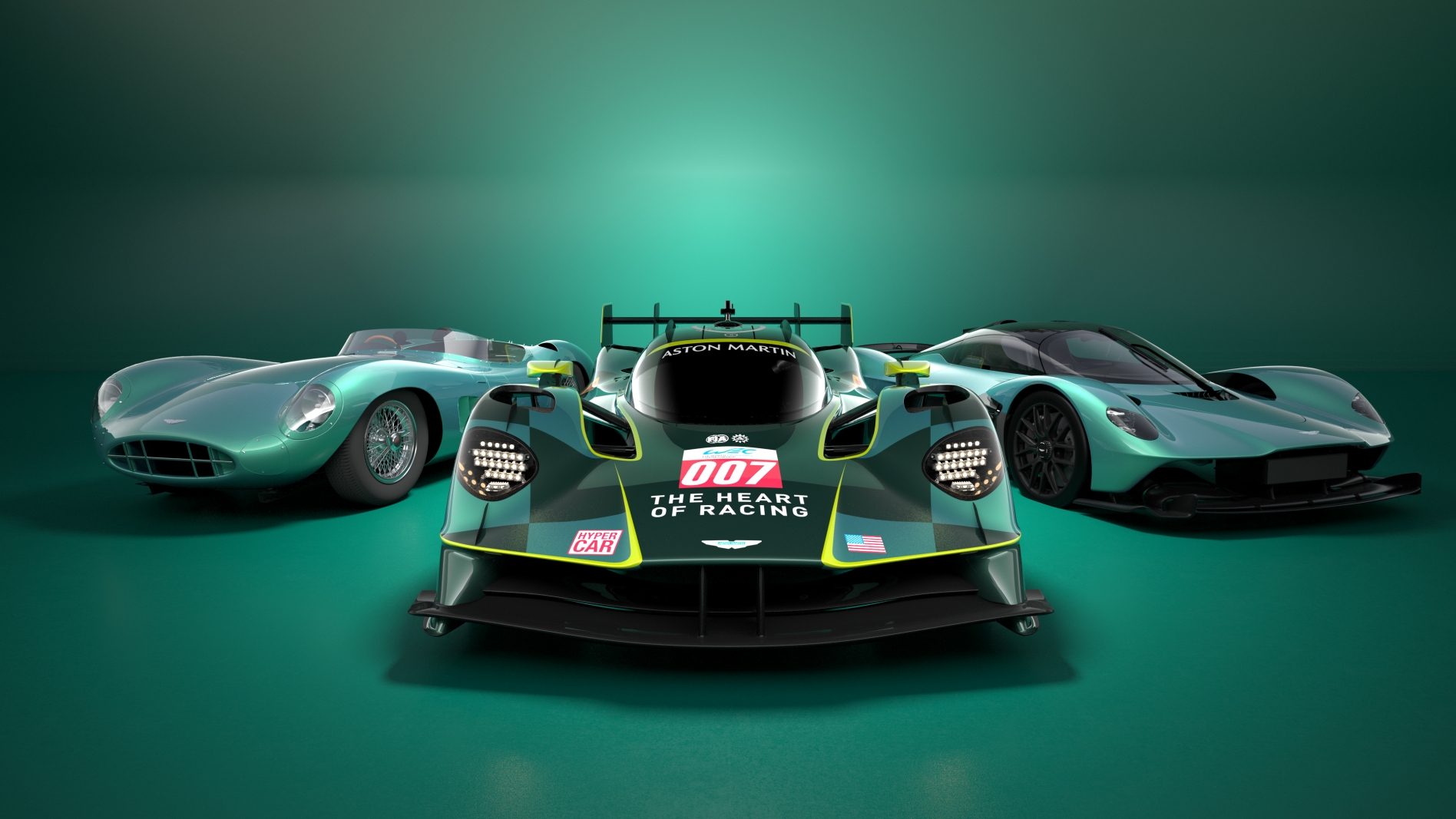
Aston Martin begins an exciting new chapter in its competitive history with the unveiling of its Valkyrie hypercar, a pure racing car derived from the road version, which will mark the British brand’s return to the pinnacle of endurance racing and enable it to compete for overall victory in the 24 Hours of Le Mans.
The Valkyrie is the only competitor derived from a road-legal hypercar and the first racing car designed according to FIA regulations for the ‘Hypercar’ category. It will compete in both the World Endurance Championship (WEC) and the IMSA WeatherTech Championship. Its competition debut will be in the first round of the 2025 WEC season, the 1812 km of Qatar, on 28 February.
Adrian Hallmark, CEO of Aston Martin Lagonda, said: ‘This is a proud moment for Aston Martin Returning to the fight for overall victory at Le Mans is at the core of our values and marks a key milestone in our racing heritage. As the only hypercar born on the road to compete at the pinnacle of motorsport in WEC and IMSA, the Valkyrie is the embodiment of our enduring sporting ethos, which has defined the brand for over a century.’
British driver line-up for Le Mans
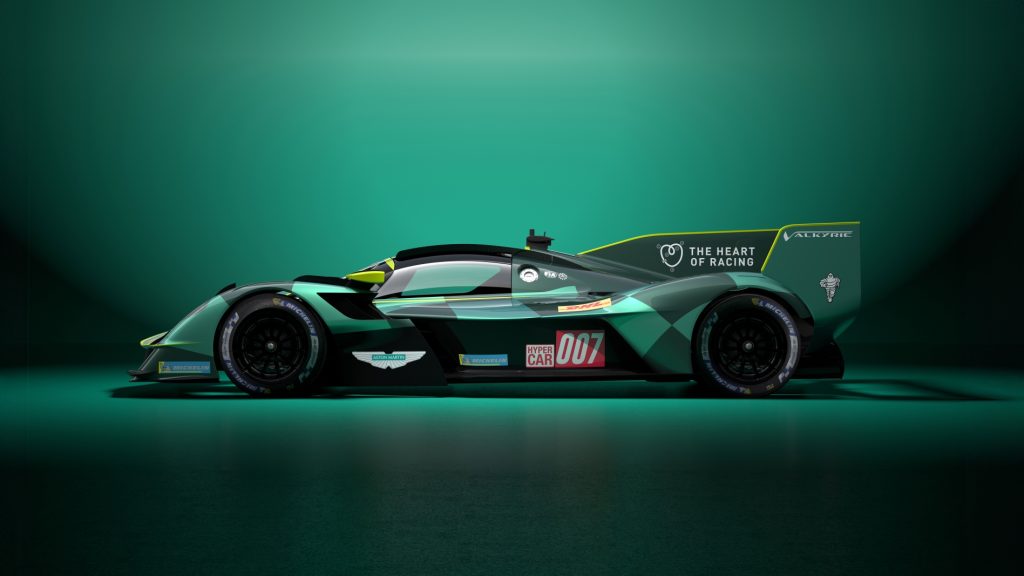
Harry Tincknell, the most recent British driver to win his class at the 24 Hours of Le Mans, will be joined by Tom Gamble, a rising star of endurance racing, in the #007 Valkyrie for the full WEC season. The sister car #009 will be driven by three-time GT World Champion Marco Sørensen and WEC LMGT3 class winner Alex Riberas.
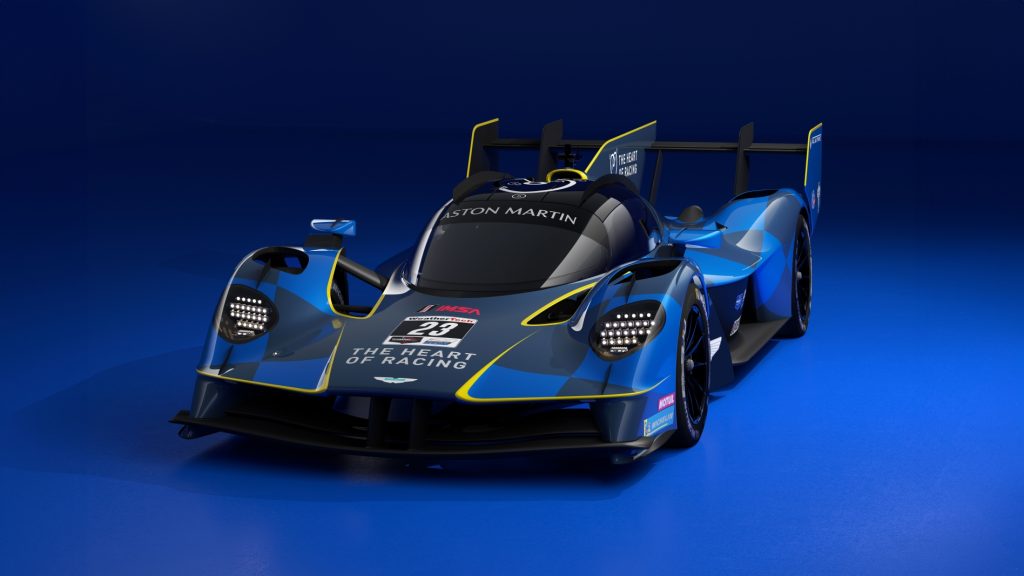
In IMSA, drivers Ross Gunn and Roman De Angelis, both GT champions, will compete in the sole entry of the Aston Martin team, THOR #23, in the GTP class. Gunn and De Angelis will also be at the 24 Hours of Le Mans to complete the three-driver teams in the Valkyrie #007.
The Valkyrie: The hypercar for racing
Developed by Aston Martin Performance Technologies and THOR, the Valkyrie is unique in its division in endurance racing Unlike other competitors, the Valkyrie has its roots in a production car, the Aston Martin Valkyrie, a high-performance hypercar. Adam Carter, Aston Martin’s Head of Endurance Motorsport, emphasised: ‘The Valkyrie is not just a hypercar, it is a revolution in automotive engineering, representing the pinnacle of innovation, design and performance.
The racing Valkyrie is powered by a modified version of the 6.5-litre Cosworth V12 engine, which in its road version develops more than 1000 horsepower. This unit is adapted to comply with Hypercar category regulations, which include a limited power output of 500kW (680bhp) to improve fuel efficiency, crucial in long-distance races. The aerodynamics of the Valkyrie were designed to comply with the strict homologation regulations, taking advantage of the original design of the road version.
Preparation for the racing programme dua
Since the first tests of the Valkyrie in July 2024, The Heart of Racing has carried out an exhaustive programme of tests, covering more than 15,000 km on circuits such as Donington Park, Silverstone, Vallelunga, Jerez, Bahrain, Qatar, Road Atlanta, Sebring and Daytona.
Ian James, team director, said: ‘The progress has been excellent, especially in terms of reliability. The whole team, from design to manufacturing and the racing team, has worked seamlessly together.’
Drivers and expectations
Expectations for the Valkyrie racing programme are high. James said the competition is fierce, but the goal is to win. ’It’s only worth winning if it’s against strong competition We know we are joining an already established group, but we want to compete at this level.”
The team is made up of drivers with experience and success in endurance racing, such as Harry Tincknell, winner at Le Mans in 2020, and Marco Sørensen, who has been WEC champion several times. Tom Gamble and Alex Riberas are also considered promising talents, with experience in top-level competitions
In IMSA, GT champions Gunn and De Angelis have been selected to compete in the 2024 season, and both will join the WEC team to complete the driver line-up at Le Mans.
Challenges and objective
Aston Martin’s dual racing programme in the WEC and IMSA has an ambitious challenge: to compete against established rivals at a very high level. ‘It’s a great time to join the pinnacle of sports car racing,’ said Carter. ‘The championships are booming and we are fully committed to this process. It’s an opportunity to compete globally in a competitive and fair environment.
The WEC season consists of eight rounds, starting in Qatar and going on to Imola, Spa-Francorchamps, the 24 Hours of Le Mans, Interlagos, COTA, Fuji and the finale in Bahrain. IMSA has 11 rounds, including the 12 Hours of Sebring, Petit Le Mans at Road Atlanta, and other major venues in the USA such as Long Beach, Laguna Seca and Watkins Glen.